About This Project

A 5–120 minutes craft for ages 8–12, using supplies you likely already have — Apples, Pencils, and Paint.

GlueStick supports kids from setup to cleanup. After they choose a project, we guide them through gathering the supplies, making it, and cleaning up when they're done. We'll even help them share it safely with trusted family and friends.

Ad-free and kid-safe library — designed by a mom who wants kids to explore and create independently.

This project is perfect for:
Project Tags
  1. 1

    Find Supplies

    Do you have everything you need?
    Create a free GlueStick account to track supplies and see if you have what you need at a glance. Leave your kids tips about where supplies are stored in your household so they can set up and clean up their creative spaces independently.
    00:00
    A cartoon of Apples
    Unknown cupboard quantity You have: unknown
    Allergen
    A cartoon of Pencils
    Unknown cupboard quantity You have: unknown
    A cartoon of Paint
    Unknown cupboard quantity You have: unknown
    A cartoon of Fresh Flowers
    Unknown cupboard quantity You have: unknown
    Allergen
    A cartoon of Colored Pencils
    Unknown cupboard quantity You have: unknown
    A cartoon of Crayons
    Unknown cupboard quantity You have: unknown
    A cartoon of Paper
    Unknown cupboard quantity You have: unknown
  2. 2

    Make Still Life Adventure Studio

    Your creative buddy says:
    "I can't wait to make a project with you!"

    Heads up! Some supplies may trigger allergies. Check with a grown-up before using them.

    Step 1: Let's Learn About Still Life Paintings

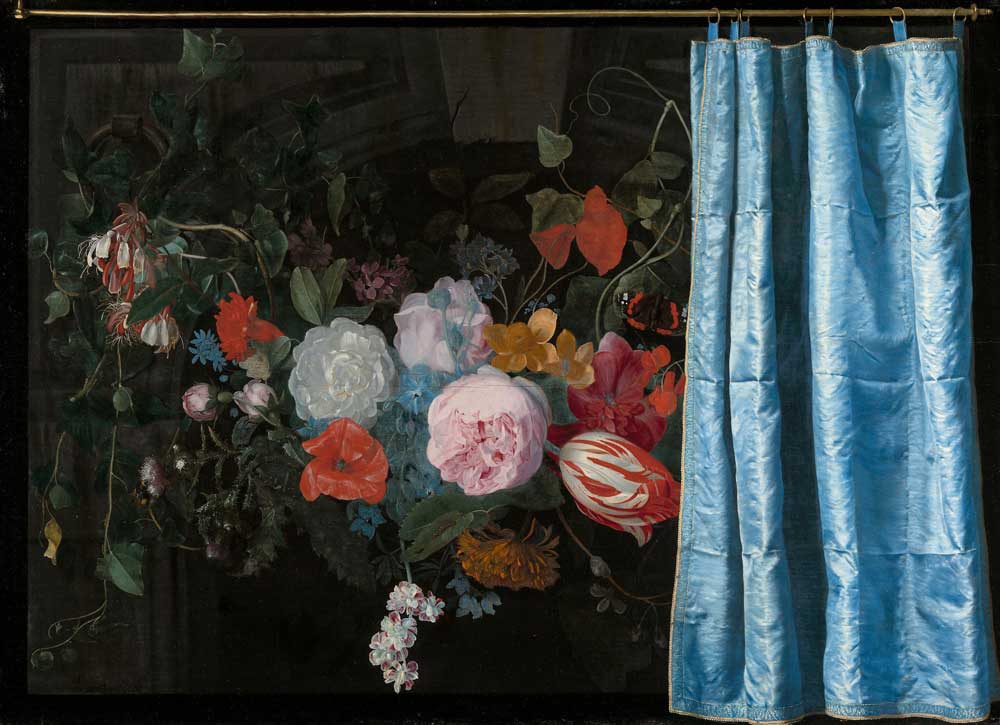
    Long ago in Ancient Greece, there were two famous artists named Zeuxis and Parrhasius. They had a contest to see who could paint the most realistic picture. Zeuxis painted grapes that looked so real, birds flew down and tried to eat them! He thought he had won for sure. Then Parrhasius showed his painting, which looked like it had a curtain over it. When Zeuxis tried to pull back the curtain to see the painting underneath... surprise! The curtain WAS the painting! Parrhasius had fooled not just birds, but another artist too! Many years later, in 1658, an artist named Adriaen van der Spelt loved this story so much that he painted his own tricky picture. He painted beautiful flowers with what looks like a curtain being pulled aside to show them. People still do a double-take when they see it - is that curtain real or painted? Image credit: https://drawpaintacademy.com/top-20-still-life-artists/ Adriaen van der Spelt and Frans van Mieris, Trompe-l’Oeil Still Life with a Flower Garland and a Curtain, 1658

    Step 2: Meet Rachel Ruysch - The Flower Queen

    Here's an amazing story about one of the most talented still life painters ever: Rachel Ruysch was a Dutch artist who lived about 300 years ago, and she started painting when she was just a teenager! Rachel had a pretty cool advantage - her father was a scientist who collected insects, plants, and all sorts of natural treasures. As a young girl, she helped him arrange and preserve specimens, learning exactly how flowers and insects looked up close. Talk about the perfect art training! She became famous for painting the most incredible flower bouquets. But these weren't just pretty pictures - they were full of surprises! In her paintings, you might find: - Tiny insects hiding among the petals - Dewdrops that looked so real you'd want to touch them - Flowers at different stages - from fresh blooms to drooping petals - Small creatures like butterflies and caterpillars The really amazing part? Rachel was one of the first women to become a professional artist. She had 10 children AND kept painting for over 60 years! Her paintings were worth more than Rembrandt's (the next famous artist we'll learn about) during her lifetime.

    Step 3: Rembrandt: Master of Light and Shadow

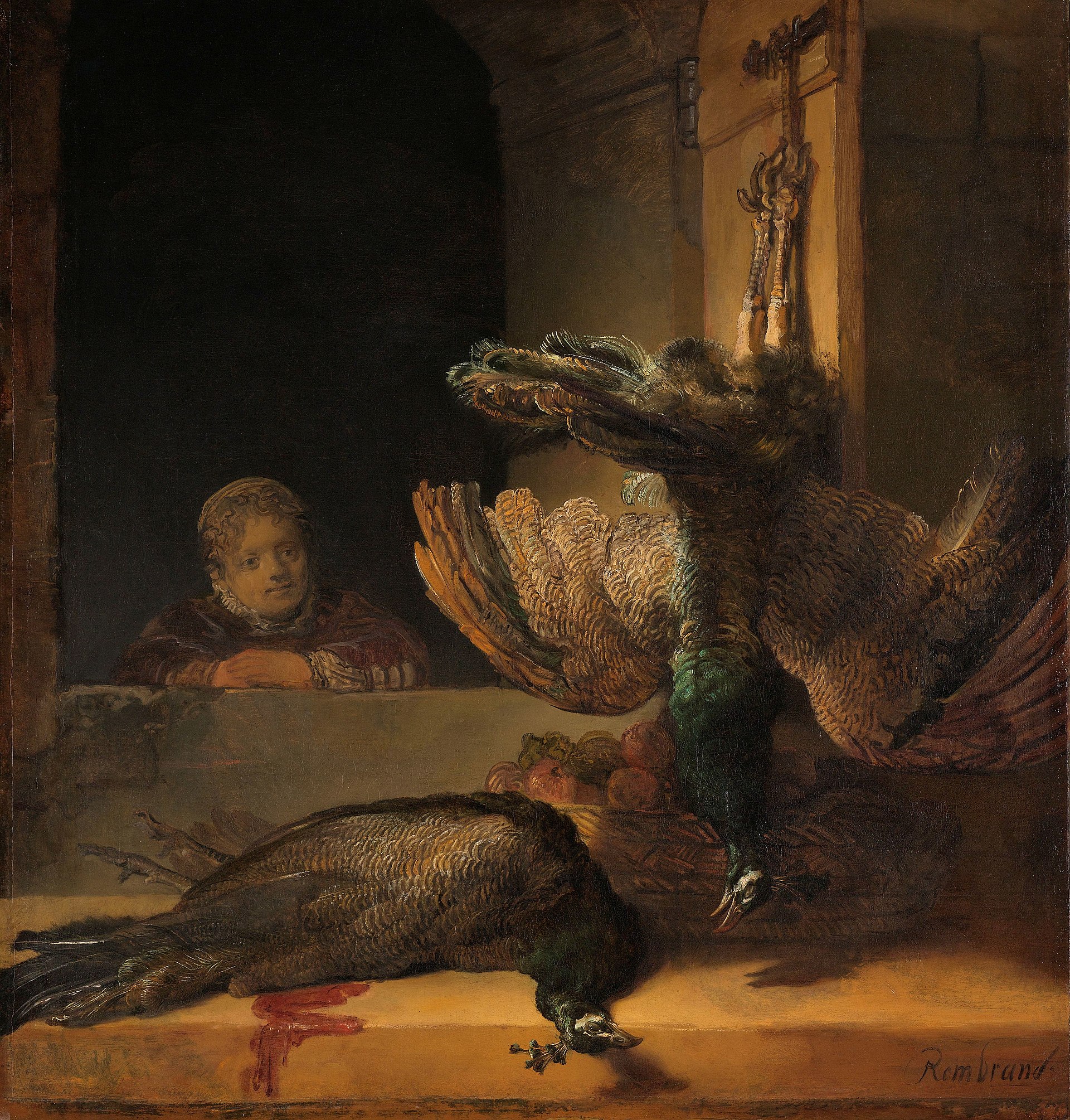
    Ever wonder how to make things in your drawing look shiny or glowing? Meet Rembrandt, another Dutch artist who was basically a magician with light! He lived in the 1600s and became famous for the way he made light dance in his paintings. One of his most amazing still life paintings is called "Still Life with Peacocks" (1639). In this painting, he shows us a dead peacock hanging in a dark cellar - but wait! It's not creepy at all because of how he painted the light hitting the peacock's feathers. The feathers shimmer and glow like jewels against the dark background. He was showing us how something can be beautiful even in an unexpected place. Here's Rembrandt's special trick that you can try: he used really bright light against dark shadows. Artists call this "chiaroscuro" (key-AR-oh-SKUR-oh), but you can just think of it as the "spotlight effect." It's like when you shine a flashlight on something in a dark room - the bright parts seem to pop out! Try This: Put your still life objects near a window Notice how one side is bright and one side is dark Look for shiny spots where the light hits See how shadows make some parts nearly disappear Fun Fact: Rembrandt was such a good teacher that his art studio was nicknamed "Rembrandt's Academy." Students came from all over Europe to learn his light and shadow tricks! Image credit: http://creativecommons.org/publicdomain/mark/1.0/

    Step 4: Create your own masterpiece

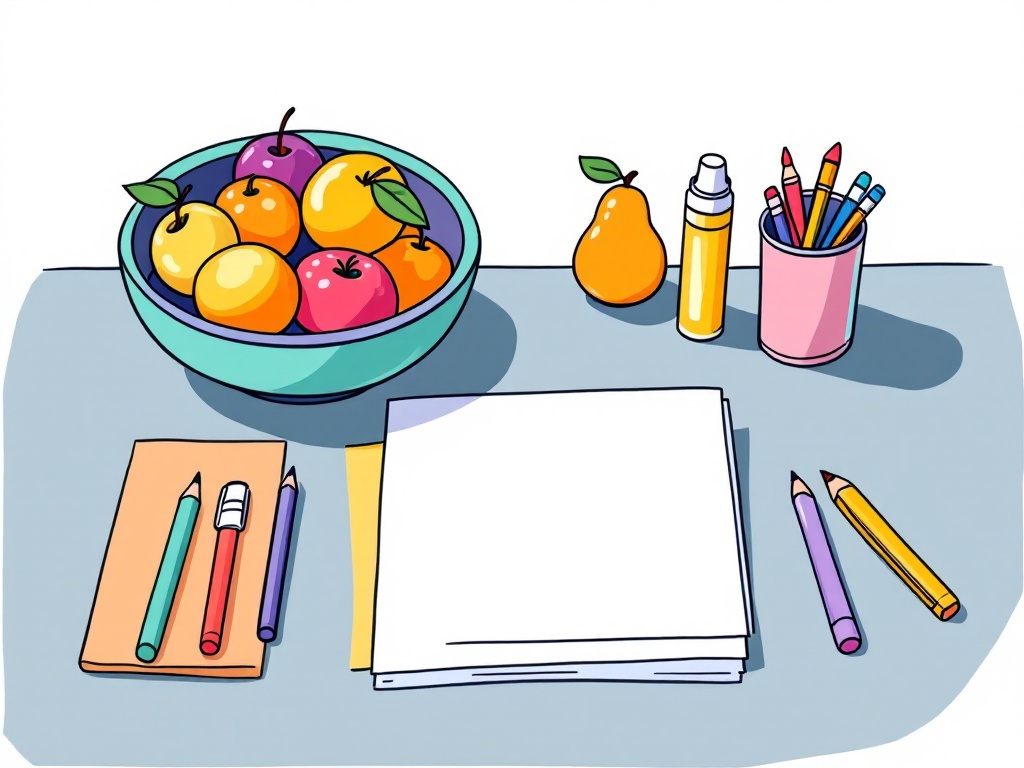
    Today's Challenge: Create your own still life picture using the fruit, flowers, and other objects in your home. If you don't have real fruit or flowers, you can use toy ones, or any other objects in your home. Just arrange them in a fun, meaningful, or unique way. Then draw or paint them. While arranging your composition, think about the things we've learned: - Will your objects tell a story like Adriaen van der Spelts? - How might you include some surprising details like Rachel Ruysch? - Can you capture the way light makes things shine like Rembrandt? Look carefully at your objects - really study them! - Notice their basic shapes - see how the bowl is round and grapes are ovals? - Look at how objects sit next to each other. Is something slightly squished by a heavy object on top? Professional still life artists: - Begin drawing the biggest shapes first - Add smaller details as they go - Color in the picture to make it come alive Some other tips: - Draw what you actually see, not what you think something looks like. For example, a shadow may make a blueberry look purple, or even black. - Notice how some objects might hide parts of others - Try to notice any interesting patterns or textures, like the peel of an orange or the ruffle of a petal.
  3. 3
    Clean up

    Put things away so your space is tidy for next time.

    Reminder, this project used supplies that may trigger allergies. Store them safely!

    Tidy up our space

    Put away our supplies

    Check off each supply when it is put away — and any clean-up tips underneath are done too. You might find a fun surprise!

    • A cartoon of Apples
      Where they belong:
      • — Don't forget! Throw away apple cores in the compost bin if your family has one.
    • A cartoon of Pencils
      Where they belong:
    • A cartoon of Paint
      Where they belong:
      • — Don't forget! Close all paint lids tightly.
    • A cartoon of Fresh Flowers
      Where they belong:
    • A cartoon of Colored Pencils
      Where they belong:
    • A cartoon of Crayons
      Where they belong:
    • A cartoon of Paper
      Where they belong:

    Update what we have left

    Did we run out of anything while making this project? Update our supply cupboard so that we know exactly what we have for next time.

    This project could unlock 2 creative buddies. Sign in to unlock them.

  4. 4

    Save

    Your creative buddy says:
    "What a fabulous project!"

    Made something awesome? Keep going.

    Your first project is free. Create your free GlueStick account to keep making — and discover projects you can do with the supplies you already have.

Upcycle supplies you already have in a flash

Snap a photo of your recycling bin, junk drawer, or fridge and GlueStick finds projects you can make right now with the supplies you already have — no store trip, no expensive kits, just more creative afternoons together.

+ 350 more
Supply Snap

About the Author